0
 Our Contacts :
Monday 15:00–19:00
Tuesday 10:00–12:00, 15:00–19:00
Wednesday 10:00–12:00, 15:00–19:00
Thursday 10:00–12:00, 15:00–19:00
Friday 10:00–12:00, 15:00–19:00
Saturday 09:00–12:00, 14:00–18:00
Sunday Closed
Tel : +33 (0)4.79.44.91.42
341 Rue Pré Gaut
73420 Voglans
 Delivery :
Guaranteed dispatch within 48 hours, for all products in stock.
 Payments :
Credit card, PayPal, bank transfer, check, installment payment by credit card.
All your payments are secure.
 Return Policy :
You can return your purchased item within 14 days of the delivery date.
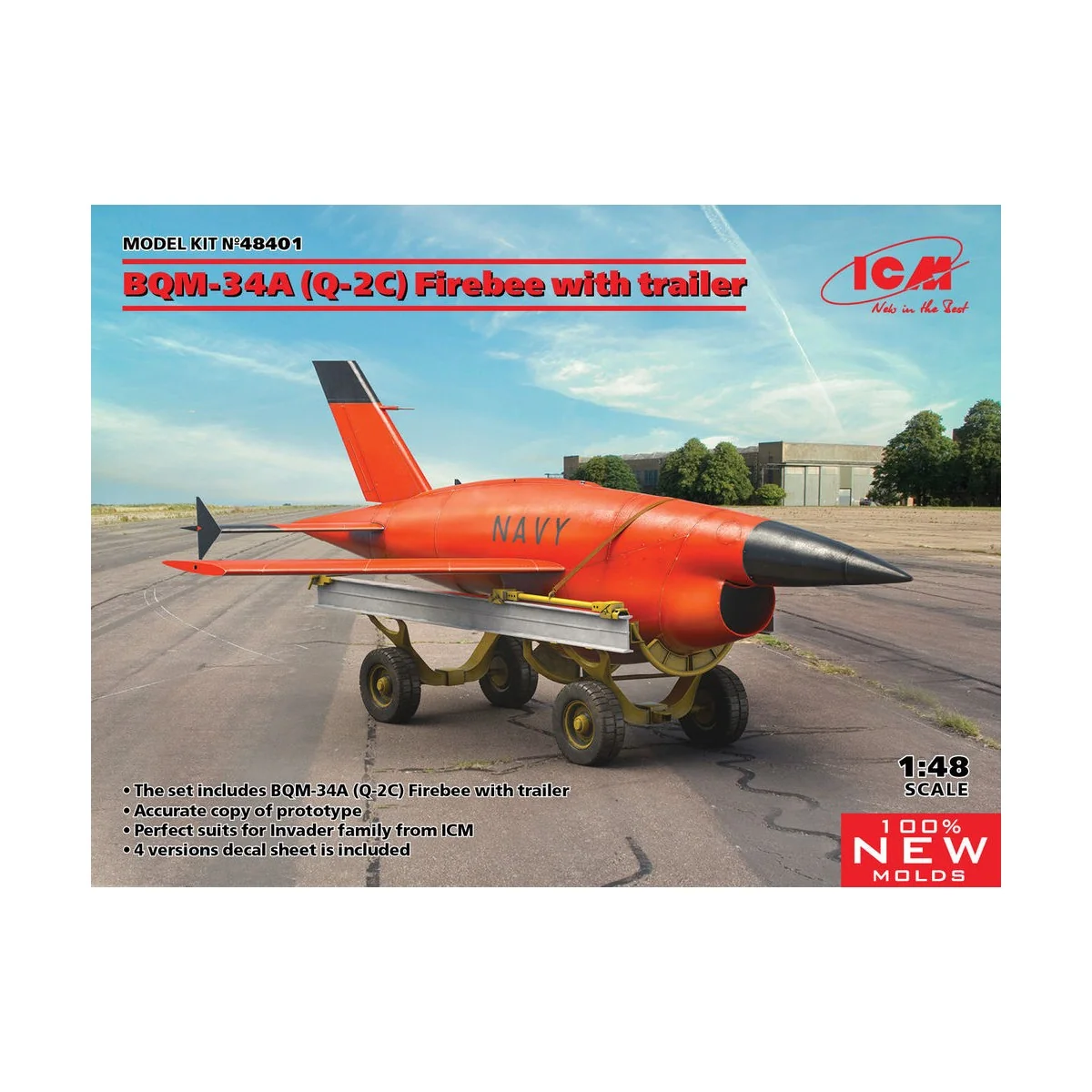
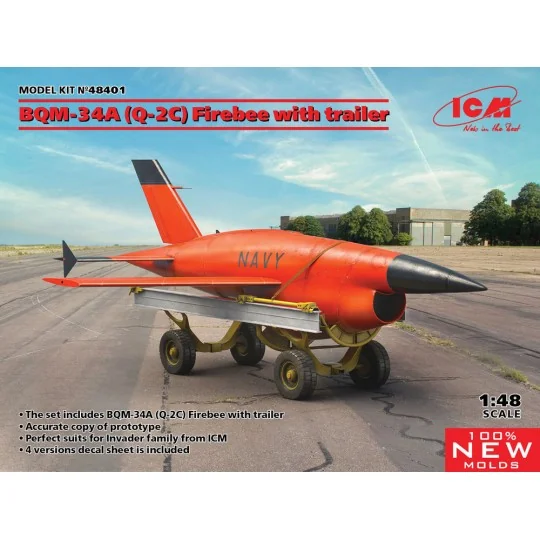
In the late 1950s, the USAF awarded Ryan a contract for a substantially improved “second generation” Firebee, the Model 124, originally with the designation Q-2C. The initial prototype performed its first flight in late 1958 and went into production in 1960. In 1963, it was redesignated the BQM-34A. The old first-generation KDA-1 and KDA-4 targets then still flying with the Navy were (somewhat confusingly) given the respective redesignations AQM-34B and AQM-34C.
The BQM-34A emerged as the Firebee as it is recognized today, with a bigger airframe, longer wings, and a particular “chin”-type inlet under a pointed nose (in contrast to the circular intake of the first-generation Firebees). It was powered by a Continental J69-T-29A turbojet, a copy of the improved Turbomeca Gourdon derivative of the Marbore, with 1,700 lbf (7.6 kN) thrust. The U.S. Navy also adopted the BQM-34A, while the Army obtained a ground-launched version designated MQM-34D with longer wings and a heavier JATO booster.
A feature of the second-generation Firebee is that some photographs show it to with triangular endplates on the tailplane, while others show no endplates but feature a ventral fin under the tail, and still others have neither endplates nor ventral fin. Since most modern hotographs of Firebees show the ventral fin, this may have been due to production changes or later refits (reference sources are unclear on this).
In 1960 the first stealth technology development program was initiated by USAF, by reducing the radar cross-section of a Q-2C drone. This was achieved through specially designed screens over the air intake, radiation-absorbent material on the fuselage and a specialradar-absorbing paint.
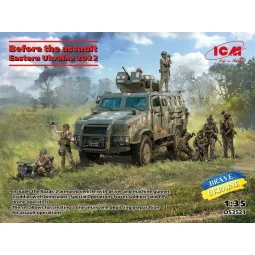
Before the assault. Eastern Ukraine 2022 from the manufacturer ICM to scale 1/35 reference DS3521 . .
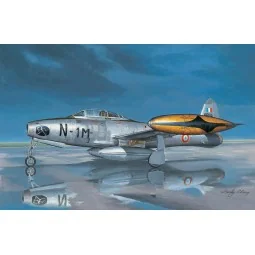
F-84G Thunderjet from the manufacturer Hobby Boss to scale 1/32 reference 83208 . .
French Rafale M from the manufacturer Trumpeter to scale 1/144 reference 03914 . .
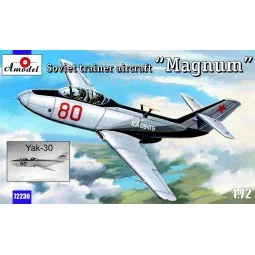
Yak-30 "Magnum" Soviet training airc. from the manufacturer Amodel to scale 1/72 reference AMO72230 . .
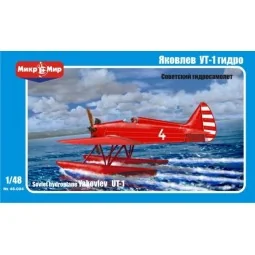
Yakovlev UT-1 Soviet hydroplane from the manufacturer Micro Mir AMP to scale 1/48 reference MM48-004 . .
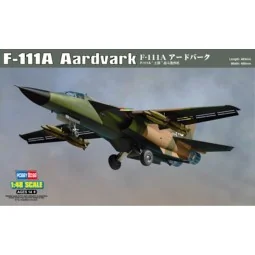
F-111A Aardvark from the manufacturer Hobby Boss to scale 1/48 reference 80348 . .
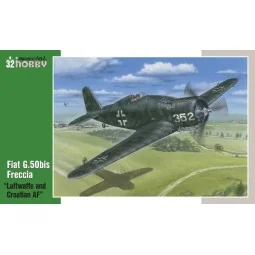
Fiat G.50bis Luftwaffe+Croatian AF from the manufacturer Special Hobby to scale 1/32 reference 100-SH32058 . .
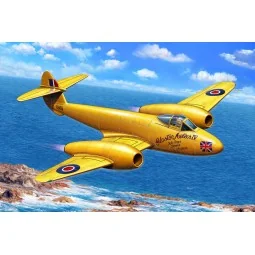
Gloster Meteor Mk.4 World Speed Record from the manufacturer Special Hobby to scale 1/72 reference 100-SH72361 . .
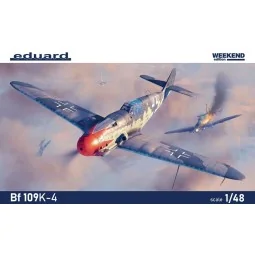
Bf 109K-4 1/48 from the manufacturer Eduard Plastic Kits to scale 1/48 reference 84197 . .
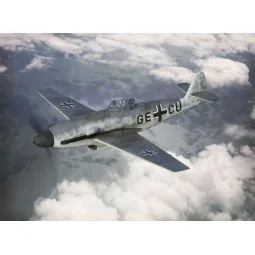
Me-309 V1/V2 from the manufacturer Brengun to scale 1/144 reference BRP144015 . .
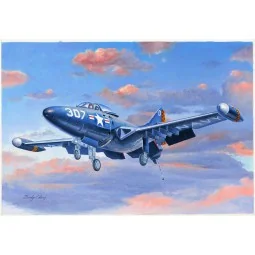
F9F-2 Panther from the manufacturer Hobby Boss to scale 1/72 reference 87248 . .
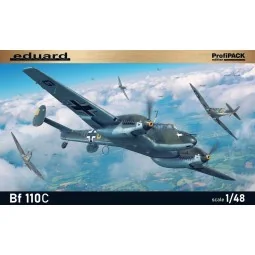
Bf 110C 1/48 Profipack from the manufacturer Eduard Plastic Kits to scale 1/48 reference 8209 . .
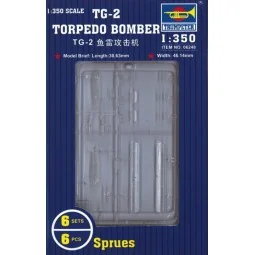
TG-2 Torpedo Bomber from the manufacturer Trumpeter to scale 1/350 reference 06248 . .
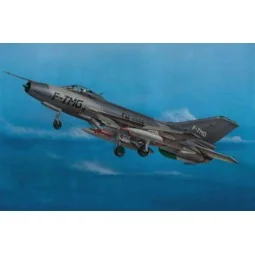
Chengdu F-7 MG from the manufacturer Trumpeter to scale 1/32 reference 02220 . .
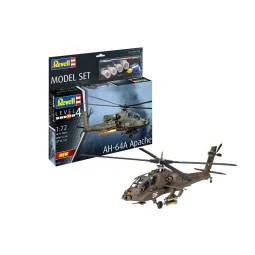
Model Set AH-64A Apache from the manufacturer Revell to scale 1/144 reference 63824 . .
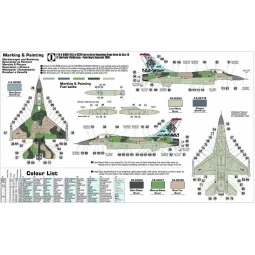
F-16A-15 Halcon Cazador from the manufacturer Mistercraft to scale 1/72 reference D-34 . .