

 fr
fr en
en de
de Shopping Cart
- Équipe NextModelKit
- Scale Modeling Guides
- 0 likes
- 41 views
- scale modeling beginner, scale selection, model tools, first project, model workflow
Last updated: 2026-07-27
Quick answer
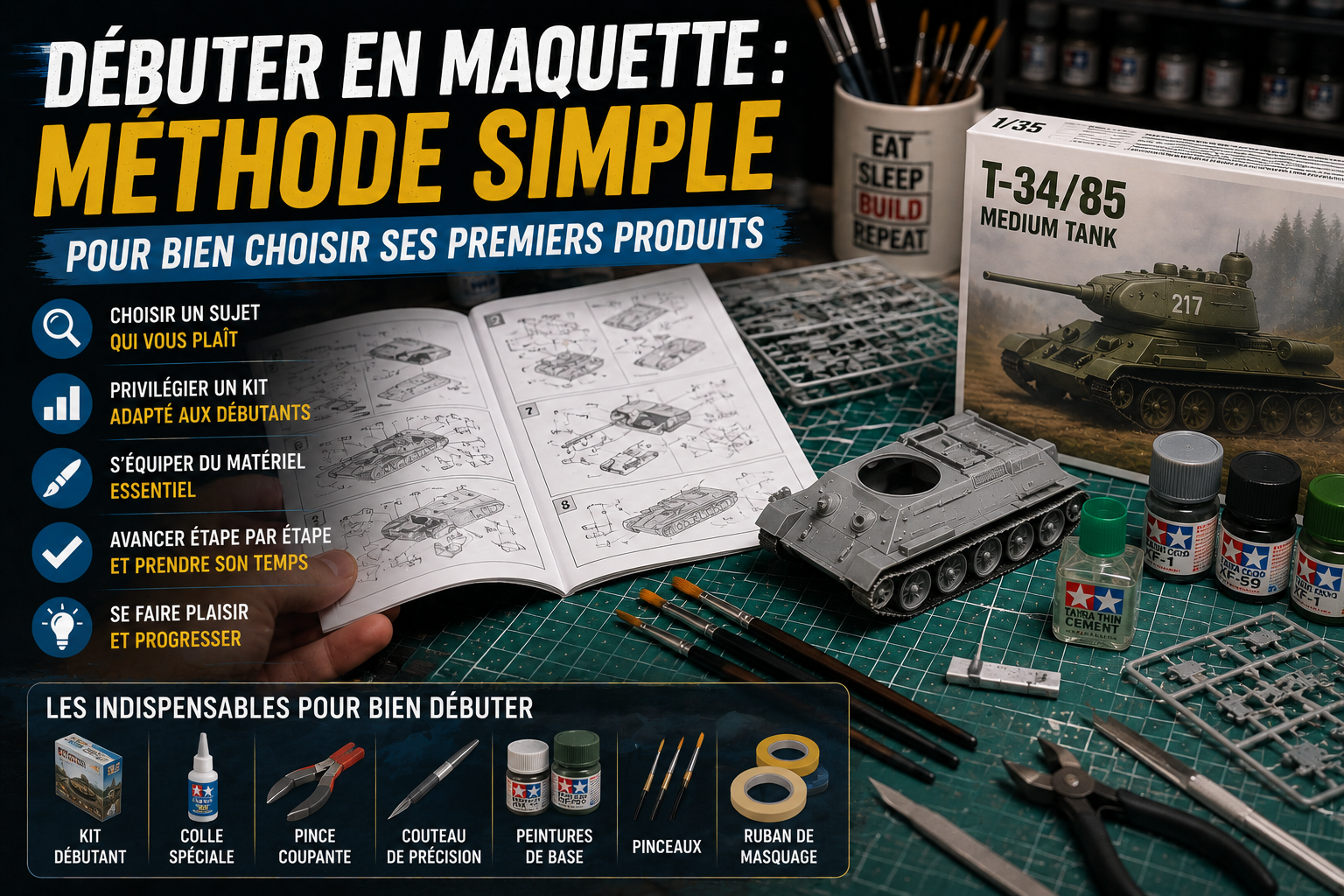
Pick a scale that fits your workspace, invest in a reliable core tool set, and keep your first supplies focused. Coherence beats volume when you are learning.
Why this guide matters
Large catalogs are helpful, but beginners need sequencing more than quantity. This guide prioritizes the right purchases in the right order.
1) Choose a scale from real constraints
- 1/72 or 1/76: compact and beginner-friendly.
- 1/48: balanced size/detail ratio.
- 1/35: richer detail, more time and space.
2) Core tool kit
- Precision nippers
- Hobby knife with spare blades
- Fine files / sanding media
- Tweezers or holding clamps
- Cutting mat
3) Glue and paint: start narrow
Use one main plastic glue, one versatile primer and a small base palette first. Skill consistency improves faster than product collection size.
4) Budget sequence
- Preparation tools
- Assembly consumables
- Paint basics
- Advanced finishing options later
5) Common mistakes
- Starting with an overly complex first kit
- Buying too many references before workflow testing
- Skipping part preparation before assembly
- Rushing through fit checks
30-day progression map
Week 1: setup and first short build.
Week 2: fit corrections and cleaner joins.
Week 3: primer and stable base coats.
Week 4: simple finishing and review.
Related guide
To structure your sessions: Scale modeling workshop organization.
Sources and method
- Beginner workflow friction analysis
- Recurring assembly and paint failure points
- Execution-first purchasing framework