
 fr
fr en
en de
de Shopping Cart
- Équipe Next Model Kit
- Scale Modeling Guides
- 0 likes
- 83 views
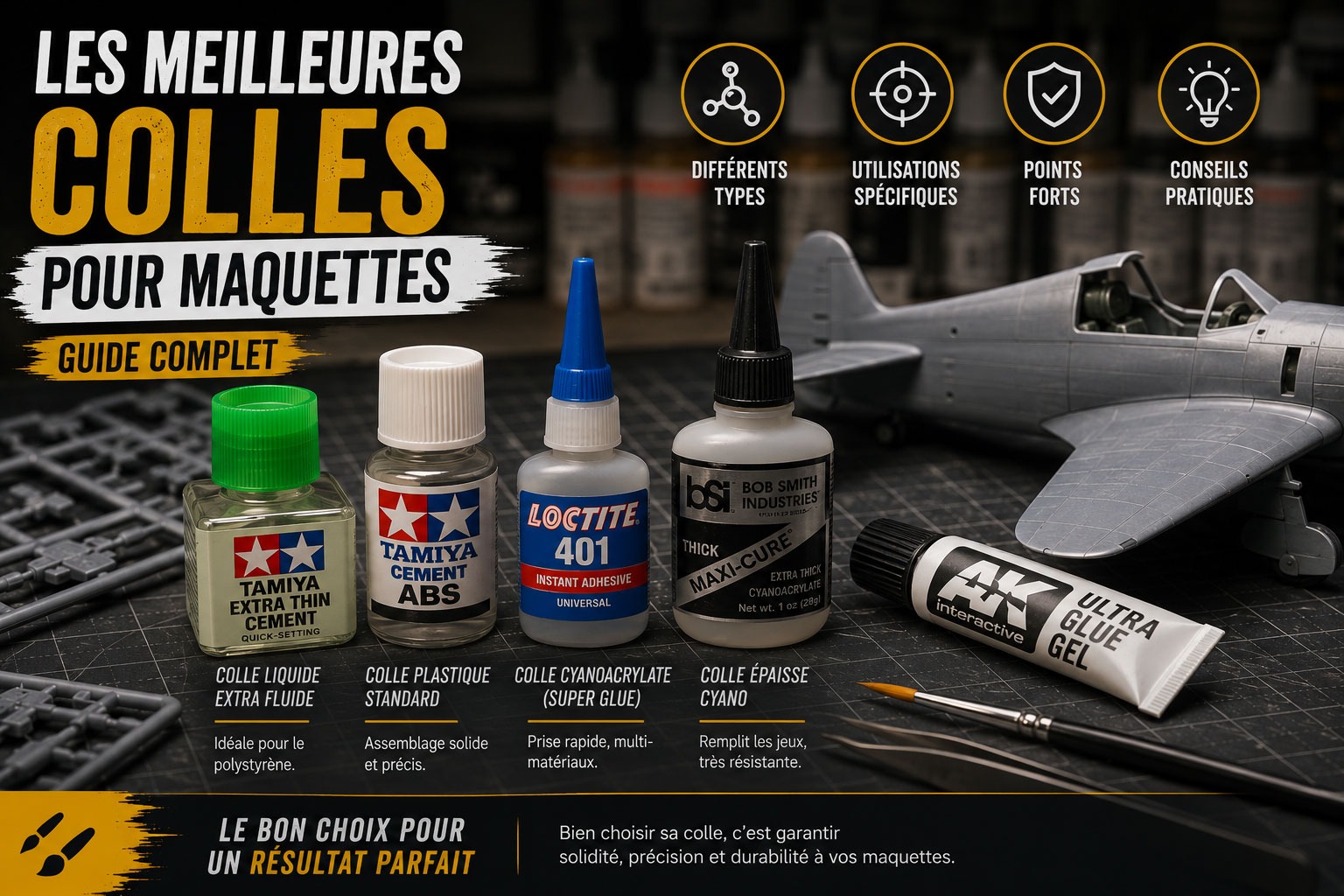
Which glue should you use for a scale model?
There is no single best glue for every model. The right product depends on the material, the size of the part, the required precision and the working time you need. A suitable glue creates a strong bond without flooding details or leaving visible marks.
For most polystyrene kits, plastic cement is the first choice. Cyanoacrylate is essential for metal, resin and photo-etched parts. Epoxy is useful for stressed joints, while PVA glue works well for clear parts and scenery.
1. Plastic cement
Plastic cement slightly melts polystyrene surfaces and creates a durable weld. It is ideal for fuselages, hulls, bodies, wings and large injected-plastic parts.
- Strengths: strong joints, durable seams and excellent precision with a fine brush or needle.
- Limits: not suitable for metal, glass or most resin; excess product can mark plastic.
- Best practice: apply a thin line inside the seam, hold the parts together and let them dry before sanding.
2. Extra-thin cement
Extra-thin cement is drawn into a closed seam by capillary action. Apply very little product along short sections and avoid touching the surface while it dries.
3. Cyanoacrylate
Cyanoacrylate, or super glue, bonds metal, resin, photo-etch and some plastics quickly. Use thin, medium or gel formulas according to the gap and working time required. It can fog clear parts, so use tiny amounts and good ventilation.
4. Two-part epoxy
Epoxy combines resin and hardener to create a strong bond on metal, resin, wood and mixed materials. It is useful for heavy parts, figures and bases, but requires careful mixing and a longer curing time.
5. PVA or white glue
PVA glue is suitable for wood, paper, card, scenery and many clear parts. It dries more slowly and is less resistant than cement or epoxy, but is forgiving and does not attack transparent plastic.
Glue by material
| Material | Recommended glue | Avoid |
|---|---|---|
| Polystyrene | Plastic cement | Excess super glue |
| Resin | Cyanoacrylate or epoxy | Plastic cement |
| Photo-etched metal | Cyanoacrylate | Plastic cement |
| Clear parts | PVA or clear-part glue | Cyano and harsh solvents |
How to glue cleanly
- Clean and test-fit the parts.
- Choose an applicator suited to the viscosity.
- Use the smallest practical amount.
- Align and hold the parts without crushing the seam.
- Allow full curing before sanding or painting.
- Inspect the joint under angled light before priming.
FAQ
What is the best glue for plastic models?
Thin plastic cement is usually the best choice for polystyrene kits.
Can you use super glue on plastic models?
Yes, especially for small parts and mixed-material assemblies, but plastic cement is usually easier to sand on large polystyrene joints.
What glue is best for photo-etch?
Cyanoacrylate is the usual choice; epoxy is useful for heavy or stressed parts.
Related resources
Explore our selection of model glues and fixing solutions to choose the right product for your assembly. Complete your setup with workshop tools and accessories and paints and finishing products.
To improve your workspace, read our guide to organizing a scale modeling workshop and our complete guide to model painting, priming and weathering.
To learn more about assembling metal detailing parts and aftermarket sets, check out our dedicated guide: how to cut, bend, and glue photo-etched and resin parts, along with our resin & photo-etched kits category.